Learn Notable Scientists
Learn history's most notable scientists and their significance!
64 free flashcards · by Ben · Math & Science / Physics
Start learning Notable Scientists for free on Cards
What you'll learn in Notable Scientists
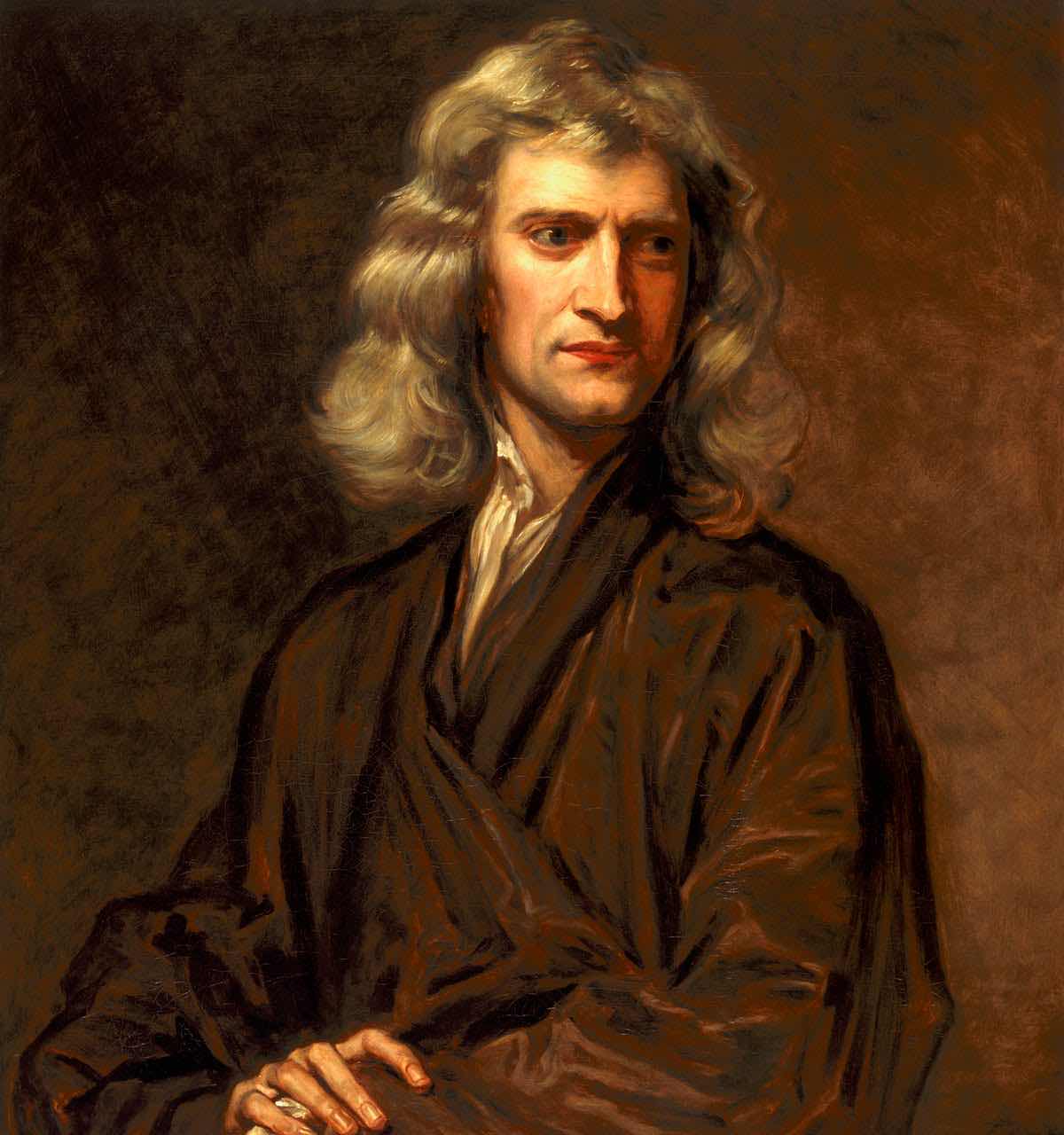
- Pioneered optics, calculus, laws of motion and gravitation — Isaac Newton
- Formulated relativity theory, E=mc² — Albert Einstein
- Discovered four of Jupiter’s moons; championed heliocentrism — Galileo
- Formulated the theory of evolution by natural selection — Charles Darwin
- Prolific mathematician; introduced modern notation and eˣ — Leonhard Euler
- Father of geometry; wrote Elements — Euclid
- “Prince of mathematicians”; foundational work in number theory and statistics — Carl Friedrich Gauss
- Formulated the three laws of planetary motion — Johannes Kepler
- Developed the first successful model of the atom — Niels Bohr
- Explained levers, devised his namesake screw, measured irregular volumes — Archimedes
- Only person to win two unshared Nobel Prizes (Chemistry 1954; Peace 1962) — Linus Pauling
- Discovered benzene; foundational work in electromagnetism — Michael Faraday
- Co-invented calculus; pioneered binary system and formal logic — Gottfried Leibniz
- Formulated his famous Last Theorem; advanced analytic geometry — Pierre de Fermat
- Father of quantum theory; 1918 Nobel Prize in Physics — Max Planck
- Introduced Hindu-Arabic numerals to Europe; known for a numerical sequence named for him — Fibonacci (Leonardo)
- Father of nuclear physics; discovered the atomic nucleus — Ernest Rutherford
- Founding father of sociology; studied social cohesion and suicide rates — Émile Durkheim
- Formulated classical electromagnetic theory — James Clerk Maxwell
- Created the first nuclear reactor; statistics named for him and Dirac — Enrico Fermi
- Formulated his namesake exclusion principle — Wolfgang Pauli
- Held 1,093 U.S. patents; invented the phonograph and improved the electric light bulb — Thomas Edison
- Discovered polonium and radium; first person to win two Nobel Prizes — Marie Curie
- Wrote The Protestant Ethic and the Spirit of Capitalism — Max Weber
- Father of computer science; cracked the Enigma code — Alan Turing
- Formulated the uncertainty principle — Werner Heisenberg
- Nobel Prize in Physics (1965); pioneered QED — Richard Feynman
- Discovered the electron via cathode-ray experiments — J. J. Thomson
- Predicted antimatter; formulated his famous namesake equation — Paul Dirac
- Theoretical cosmologist; has a namesake type of radiation — Stephen Hawking
- Demonstrated the universe is expanding; large space telescope named for him — Edwin Hubble
- Identified oxygen and hydrogen; “father of modern chemistry” — Antoine Lavoisier
- Measured the electron charge in the oil-drop experiment — Robert Millikan
- Founded his namesake Motor Company; revolutionized assembly line production — Henry Ford
- Created the periodic table — Dmitri Mendeleev
- Wrote the Almagest; geocentric model — Ptolemy
- Proposed wave–particle duality; Nobel Prize in Physics 1929 — Louis de Broglie
- Has a famous namesake hypothesis; foundational in analysis and geometry — Bernhard Riemann
- Double-slit experiment; elasticity modulus — Thomas Young
- Discovered cells; formulated his namesake Law — Robert Hooke
- Developed wave mechanics; famous namesake equation — Erwin Schrödinger
- Discovered Uranus and infrared radiation — William Herschel
- Wave theory of light; pendulum clock inventor — Christiaan Huygens
- Proposed a heliocentric model of the solar system — Nicolaus Copernicus
- Formulated circuit laws and laws of black-body radiation — Gustav Kirchhoff
- Father of microbiology; developed pasteurization — Louis Pasteur
- Founder of statistical mechanics — Ludwig Boltzmann
- Made the most precise pre-telescope astronomical observations — Tycho Brahe
- Father of genetics; pea-plant inheritance experiments — Gregor Mendel
- Discovered several alkali and alkaline earth metals (e.g., sodium) — Humphry Davy
More Physics flashcards
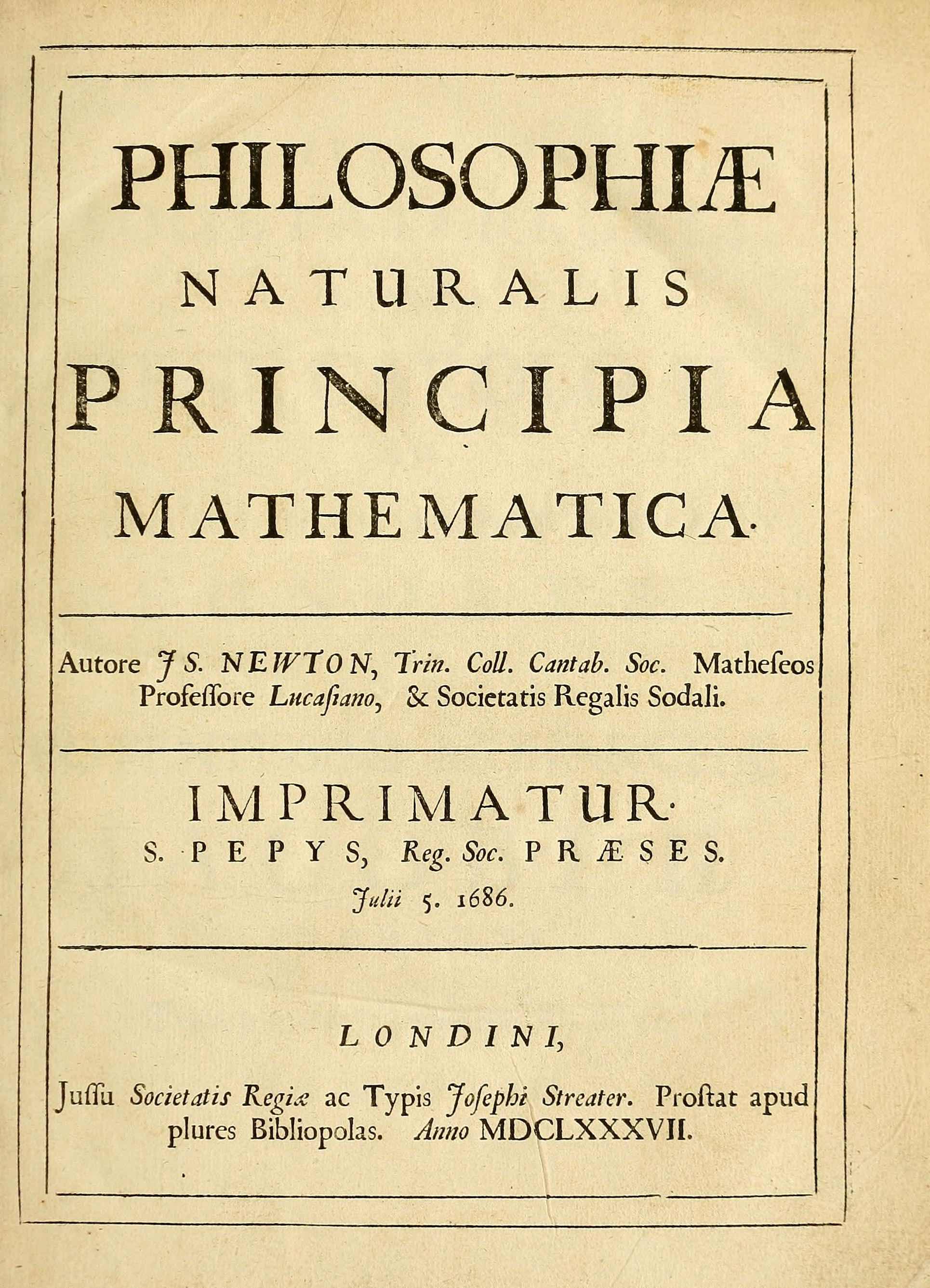 Famous Works of Science · 203 cards
- Scientific Discoveries · 145 cards